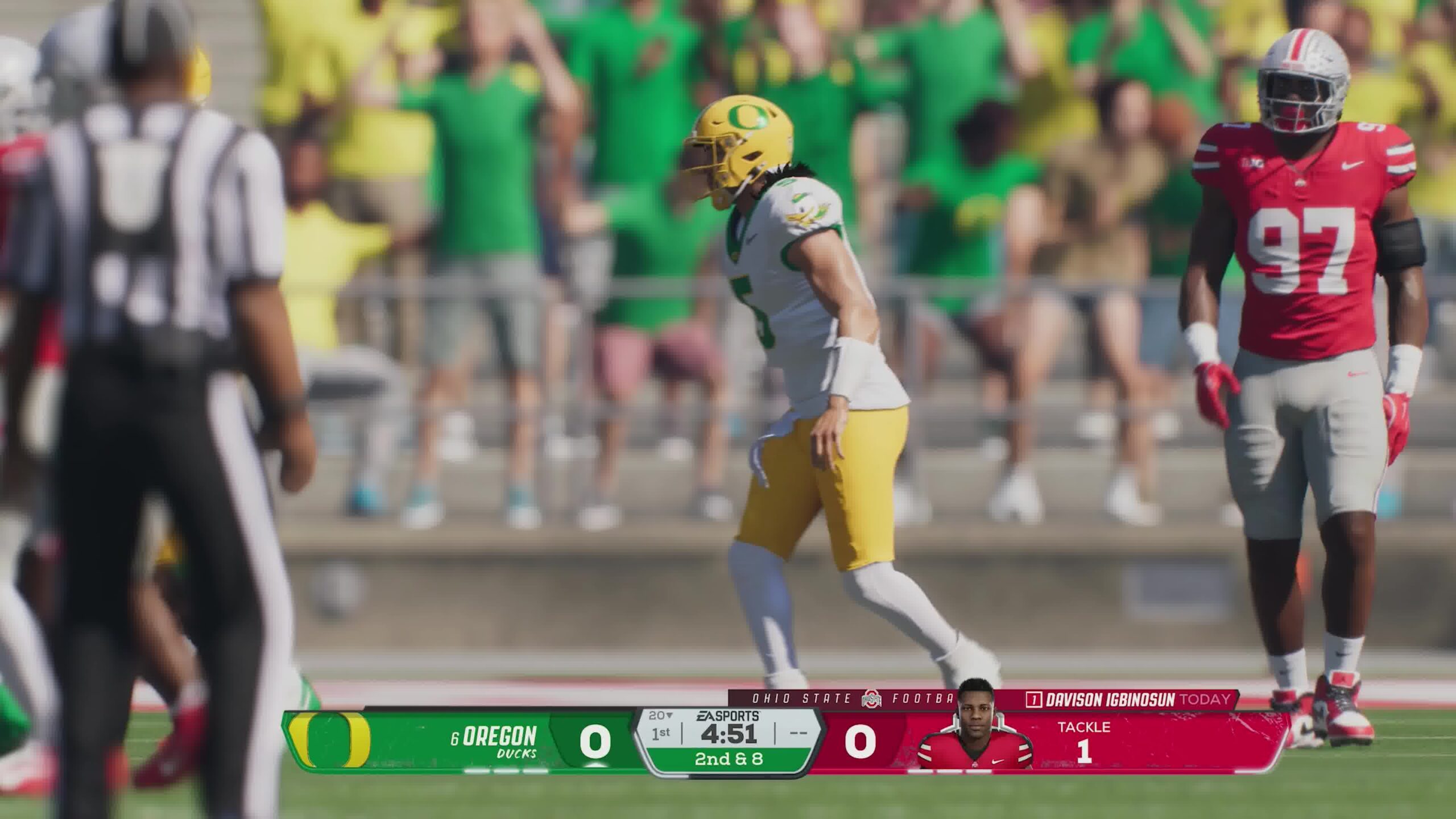
College Football 27 Dynasty Deep Dive: Persona Systems, Coaching Import, and Smarter AI Rebuilds
The recent deep-dive discussion surrounding EA Sports College Football 27 paints a clear picture of where the franchise is heading: deeper systemic simulation, more human-like decision-making, and a Dynasty mode that is increasingly about managing an evolving ecosystem rather than simply optimizing ratings and recruiting pipelines. Much of the reaction from community creators focused on how these changes align with broader franchise innovations seen across EA’s sports ecosystem, particularly in Madden—but translated into the college environment, the implications are even more impactful.
At the center of the conversation is a shift in design philosophy: Dynasty mode is no longer just a spreadsheet-driven progression loop. Instead, it is being rebuilt around dynamic systems that simulate personality, coaching identity, roster volatility, and long-term program narrative arcs.
Dynasty Mode Becomes a Living Ecosystem
One of the most significant structural ideas tied to College Football 27 is the expansion of “living systems” within Dynasty mode. Players, recruits, and even coaching staff are no longer static attributes on a roster screen. Instead, they behave according to layered traits that influence how they respond to success, failure, playing time, and contract or scholarship negotiations.
This mirrors the broader “persona-driven simulation” design philosophy seen across EA’s sports titles, where athletes have evolving motivations that shape team chemistry and roster stability over time.
In a College Football 27 context, this means:
- Star recruits may reconsider commitments based on program momentum
- Veterans can transfer if development expectations are not met
- Coaching decisions ripple across recruiting classes and locker room morale
The result is a Dynasty experience that emphasizes adaptability over optimization.
Coaching Identity and Career Import Systems
A standout feature discussed in the broader deep-dive ecosystem is the integration between college and professional coaching pipelines. In College Football 27, Dynasty coaching archetypes are no longer isolated systems.
Instead, your college coaching identity can carry forward into other EA ecosystems, potentially influencing future franchise progression paths. This creates a continuity layer where your decisions in Dynasty mode have long-term implications beyond a single save file.
This design direction reinforces a more connected sports ecosystem inside EA’s portfolio and adds weight to long-term Dynasty progression decisions. Recruiting schemes, playstyle choices, and program culture now matter not just for winning seasons—but for defining a coaching legacy.
Weekly Storylines and Emergent Program Drama
Another major evolution is the introduction of a weekly narrative hub system. Rather than relying on static menus or pre-scripted events, College Football 27 introduces emergent storylines that react dynamically to performance, recruiting outcomes, and conference-wide developments.
Examples of emergent systems include:
- Rival programs suddenly surging due to breakout quarterback development
- Unexpected transfer portal shakeups altering conference power balance
- Recruiting battles escalating based on weekly performance trends
This system shifts Dynasty away from deterministic outcomes and toward probabilistic storytelling. No two seasons are expected to unfold the same way, which significantly increases long-term replayability.
Recruiting, Transfers, and Negotiation Depth
Recruiting in College Football 27 is also being repositioned as a negotiation-driven system rather than a simple points allocation mechanic. Players have more defined motivations, and recruiting outcomes depend heavily on alignment between program identity and athlete expectations.
Key changes include:
- More dynamic recruitment responses based on playing time projections
- Transfer portal decisions influenced by program momentum and stability
- Increased unpredictability in late-stage recruiting flips
This creates a more realistic simulation of modern college football roster construction, where NIL influence, opportunity, and program reputation all intersect.
Smarter AI, Coaching Logic, and Program Behavior
A major technical improvement is the refinement of AI decision-making across Dynasty systems. Programs are expected to behave more realistically in:
- Recruiting priorities
- Roster management
- In-season depth chart adjustments
- Transfer portal aggression
Instead of repeating predictable patterns year over year, CPU-controlled programs adapt to roster composition and competitive context. This is especially important in long-term Dynasties, where traditional systems often break down due to repetitive AI behavior.
Smarter logic ensures that rebuilding a mid-tier program or maintaining a powerhouse requires consistent strategic adaptation rather than exploiting predictable AI flaws.
Economy, Progression, and Ultimate Team Integration
While Dynasty remains the core experience, College Football 27 also ties into broader progression ecosystems, including monetized team-building modes. This is where systems like CFB 27 Coins become relevant in the overall structure of player progression and team customization.
As players engage with multiple modes, currency systems are positioned as a bridge between competitive progression and roster acceleration—particularly in Ultimate Team-style environments that run parallel to Dynasty.
Final Perspective
The overall direction of College Football 27 signals a shift toward deeper simulation architecture, where programs behave less like static databases and more like adaptive organizations. Between persona-driven athletes, evolving coaching identities, and emergent weekly narratives, Dynasty mode is moving closer to a living simulation of college football culture.
If these systems deliver consistent variety and AI reliability, NCAA Division I Football Bowl Subdivision gameplay in College Football 27 could represent one of the most structurally advanced sports Dynasty experiences to date.